---Elder, Veteran, Activist, Leader, Advocate, Changemaker ---
(CULTURAL WARNING: This yarn is about a Noongar Warrior who has passed away).
Birth and early life
Ken Colbung AM, MBE, also known as Nundjan Djiridjarkan, was a well-known Noongar Elder of the Bibbulmun people and one of 60 First Nations Australians who served in Korea.
Ken was born to Eva Colbung on 2 September 1931 in either the Moore River settlement or Broomehill. Eva passed away when Ken was a baby, so he spent his early years with his auntie and the Moore River community, where Ken later recalled around 50 First Nations tribes were living.
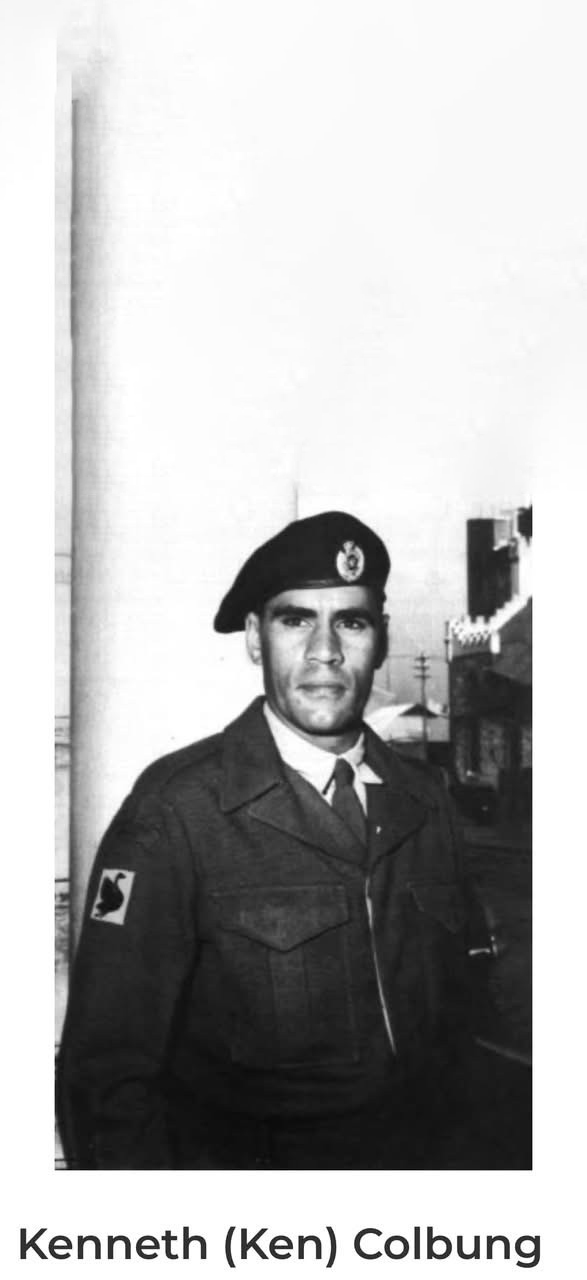
Kenneth (Ken) Colbung AM, MBE in dress uniform. Courtesy of Ken's daughter Esandra.
War Service
At the outbreak of the Korean War in 1950, Ken, aged 19, joined the Australian Army, where he picked up sports, received an education and trained as an engineer.
Ken was part of the multinational British Commonwealth Occupation Force (BCOF), which occupied Japan after its defeat in World War II. The BCOF comprised approximately 45,000 personnel from Britain, India, New Zealand and Australia, with Australia responsible for more than 20 million Japanese citizens during the occupation.
The BCOF was deployed to South Korea on 25 August 1950 after North Korea invaded South Korea. Australia initially deployed one infantry battalion, one fighter squadron and two naval vessels to the conflict.
Ken served with the 3rd Battalion, Royal Australian Regiment (3RAR), one of only three units awarded the United States Presidential Unit Citation following the Battle of Kapyong in April 1951. During the battle, Australian, Canadian and New Zealand forces helped slow a major Chinese advance toward Seoul.
From October 1951 until the ceasefire in July 1953, the 3RAR patrolled the no-man's land between opposing trench lines, conducting trench raids and reconnaissance operations. They endured hot and humid summers and freezing winters, while combating trench foot and frostbite, before returning to Australia in 1954.
More than 17,000 Australians served in the Korean War; 340 were killed and more than 1,000 wounded.
The images and sounds of displaced women and children left a lasting impact on Ken. In a 1998 ABC radio interview, he described the sound of humanity in war as "more deadly than any bullet", saying it was "more discerning than any shell blast that you could ever recollect." He later reflected that witnessing the destruction of the landscape deepened his respect for both humanity and the environment.
Ken returned to civilian life in the 1960s, a time when First Nations people were still fighting for civil rights. He experienced psychological impacts associated with his wartime service and the challenges of returning to civilian life.
Love & Legacy
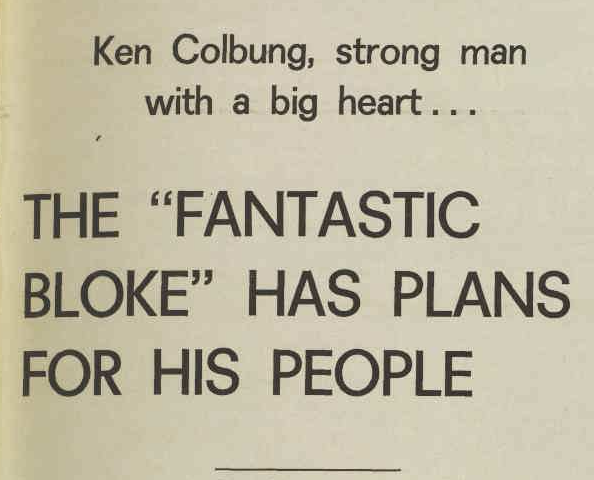
Figure 1 THE "FANTASTIC BLOKE" HAS PLANS FOR HIS PEOPLE (1969, September 24).
The Australian Women's Weekly (1933 - 1982), p. 43. Retrieved October 21, 2026, from http://nla.gov.au/nla.news-article48083320
With the support of his family, Ken became a respected First Nations activist and leader in Western Australia. Among his many accomplishments was his significant role in developing the Aboriginal Heritage Act 1972, which governed the protection of Western Australia's Indigenous heritage sites.
In the 1980s, Ken pointed out to Uncle Simon Forrest the location of Mindeera Spring in Victoria Park, a place of deep cultural significance to Whadjuk Noongar people.
Mindeera Spring was considered neutral ground where different groups could meet without conflict and where fighting was prohibited to allow safe passage to the river. Located at the corner of Oswald and Hordern Streets, Victoria Park, it served as an important water source for Noongar people camping along the Derbarl Yerrigan (Swan River) and remains a listed Aboriginal Heritage site.
Today, the spring continues to flow into underground stormwater catchments that discharge into the river at McCallum Park. Work is currently being undertaken to assess the feasibility of daylighting or rewilding the spring in recognition of its significance to local Elders and the wider community. Through Mindeera Spring, Ken's cultural knowledge and wisdom continue to influence the Town's approach to reconciliation.
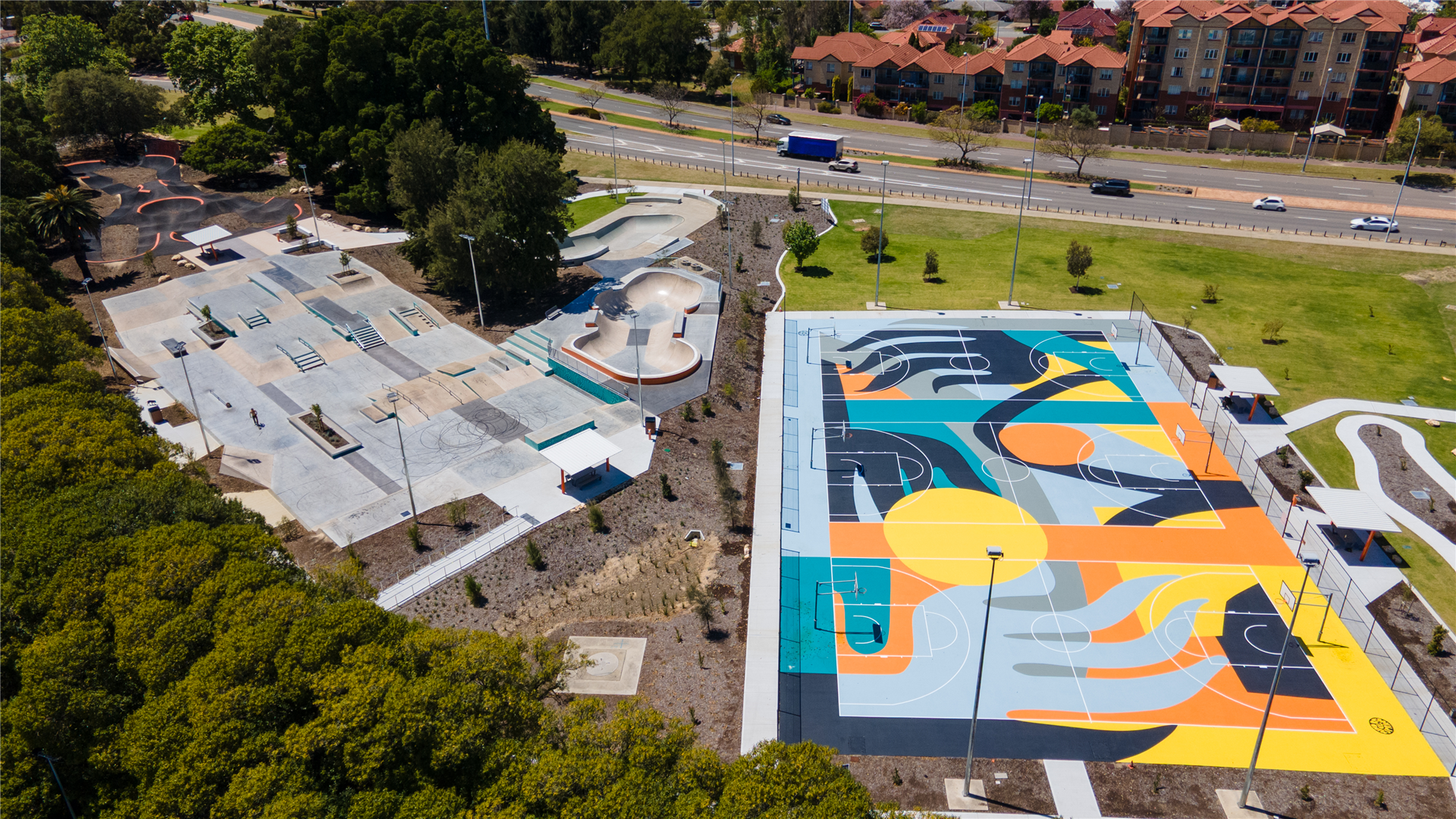
In 2025 artists Chris Nixon and Kamsani gave new life to the basketball courts and new skate plaza at McCallum Park by creating artwork inspired by and titled ‘Mindeera Spring’.
Ken also dedicated more than 20 years to locating the remains of his ancestor, Noongar warrior Yagan. The eventual return of Yagan's remains was of profound significance to Noongar people, enabling an important leader and warrior to be returned to Country after more than 160 years.
Ken was awarded a Member of the Order of the British Empire (MBE) in 1980 and appointed a Member of the Order of Australia (AM) in 1982.
Ken passed away in 2010 at the age of 78 and is survived by his daughter, Esandra.
Ken's legacy continues through the Town's Mindeera Advisory Group, established in 2018 and named after the spring. The group plays an important role in fostering reconciliation, respect and inclusion, helping to strengthen connections across the community.
The Town honours Ken’s service in the Korean War and acknowledges the lasting sacrifices he carried beyond the battlefield. We remember his contribution as a war veteran, alongside his enduring legacy as a Noongar leader and cultural knowledge holder, with respect and gratitude.
Lest We Forget.
References:
British Commonwealth Occupation Force 1945–52 | The Australian War Memorial. (2016). Awm.Gov.Au. https://www.awm.gov.au/articles/atwar/bcof
Browning, D. (2007, August 25). Ken Colbung speaks from the heart [Broadcast]. In AWAYE! ABC Radio National. https://www.abc.net.au/listen/programs/awaye/ken-colbung-speaks-from-the-heart/3669366?utm_content=link&utm_medium=content_shared
Forde, C. (n.d.). Repatriation: The search for Yagan. https://www.kooriweb.org/foley/museums/nma2004.pdf
Genge. (1931, September 2). Kenneth Desmond Colbung. Anzac Portal. https://anzacportal.dva.gov.au/stories/biographies/kenneth-desmond-colbung
Hunter, C. (2023). ‘We didn’t know what our future would be’. Australian War Memorial. https://www.awm.gov.au/articles/blog/kenneth-colbung
THE "FANTASTIC BLOKE" HAS PLANS FOR HIS PEOPLE (1969, September 24). The Australian Women's Weekly (1933 - 1982), p. 43. Retrieved October 21, 2026, from http://nla.gov.au/nla.news-article48083320